Several initial public offerings (IPOs) are open or lined up in India this month, from small SME issues to Jio Platforms, which is aiming to raise as much as ₹30,200 crore. Each of them shows a different part of how an IPO works. This guide uses those live examples to explain the terms.
What happened
According to Economic Times, companies have raised over ₹1.1 lakh crore through 96 public issues so far in 2026, and more are lined up this month. That makes it a good time to understand the mechanics.
What an IPO is
An initial public offering (IPO) is the first time a company offers its shares to the general public, after which the shares trade on a stock exchange. The regulator, the Securities and Exchange Board of India (Sebi), reviews the draft offer document, called the draft red herring prospectus (DRHP), before a company can proceed.
Indian Gas Exchange is a recent example. It filed its draft papers in July and, as reported, Sebi gave its final observation on 12 October, which lets the company go ahead with preparations, subject to regulatory requirements.
Fresh issue versus offer for sale
A fresh issue means the company creates new shares and receives the money. Ravita Engineering Services, for instance, has a ₹116.05 crore issue made up entirely of a fresh issue of 1.04 crore shares.
An offer for sale (OFS) means existing shareholders sell some of their shares. The company gets nothing. Indian Gas Exchange’s proposed IPO is entirely an OFS of up to 1.67 crore shares by its promoter, Indian Energy Exchange (IEX), so the entire proceeds go to IEX. Reports say IEX holds over 47% of IGX and, under regulations, has to bring that down to 25%.
Price band and minimum bid
A price band is the range in which investors may bid for shares. Fusion CX’s ₹702 crore issue, open from 14 to 16 October, was priced at ₹275-289 per share, with a minimum retail investment of ₹14,739. The minimum is set by the number of shares in one lot multiplied by the price.
Jio Platforms’ band is ₹1,065-1,119 per share, as reported by Mint and BusinessLine citing company filings.
Anchor investors and reserved portions
Before an issue opens to the public, large institutions can be allotted shares in an anchor book. Ahead of its public issue, Fusion CX lined up ₹315 crore from such investors, a group that includes Ashish Kacholia and Kotak Mahindra Life Insurance. For Jio, the anchor book is reported to open on 19 October, with the public issue running 21 to 23 October.
Issues can also reserve portions for particular groups. Filings cited by Mint and BusinessLine show Jio set aside up to ₹500 crore of shares for eligible employees at a 5% discount, and up to ₹2,500 crore for eligible Reliance Industries shareholders.
SME issues
Small and medium enterprises list on dedicated platforms such as the NSE SME platform. Vaibhav Vyapaar’s ₹42.10 crore IPO opened on 13 October on that platform at ₹51-54 per share, and the non-banking finance company plans to use proceeds mainly to strengthen its capital base. Ravita Engineering is scheduled to list there on 22 October, with allotment expected on 19 October.
Sebi’s rule on issue size
Sebi has extended, till March 2027, a temporary relaxation that lets companies revise the size of their fresh issue without filing fresh draft documents, according to Economic Times. It gives issuers flexibility when markets are volatile. See our coverage of the extension.
What it means for you
Before bidding, you can check three things in the offer document: whether the issue is a fresh issue, an OFS or both; where the money goes; and the price band and minimum amount you must commit.
You will also see references to the grey market premium (GMP), an unofficial indicator of demand reported alongside issues such as Fusion CX (around 12%). It is not regulated and does not guarantee the listing price.
You need a demat account to hold the shares. Reports say Reliance has asked staff whether they have such accounts for Jio’s IPO.
Background
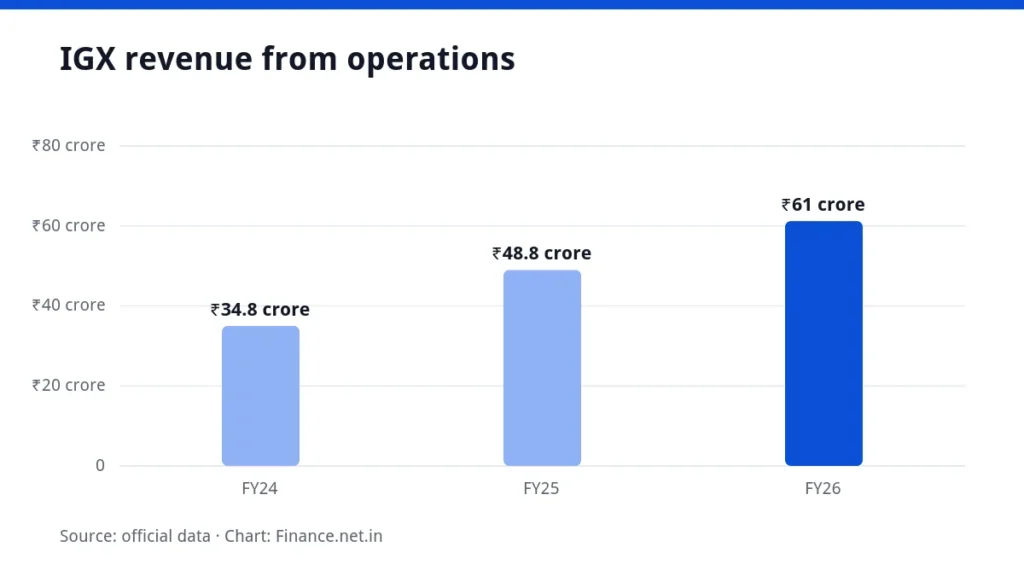
IGX began operating its gas trading platform in June 2020 and reported revenue from operations of ₹61 crore in the year to March 2026, up from ₹48.8 crore in FY25 and ₹34.8 crore in FY24. Jio’s issue is reported to be on track to be the biggest in India. Related reading: IGX’s Sebi approval.
What to watch next
Jio’s anchor book opens on 19 October and its public issue runs 21 to 23 October. Ravita Engineering’s shares are tentatively set to list on 22 October.