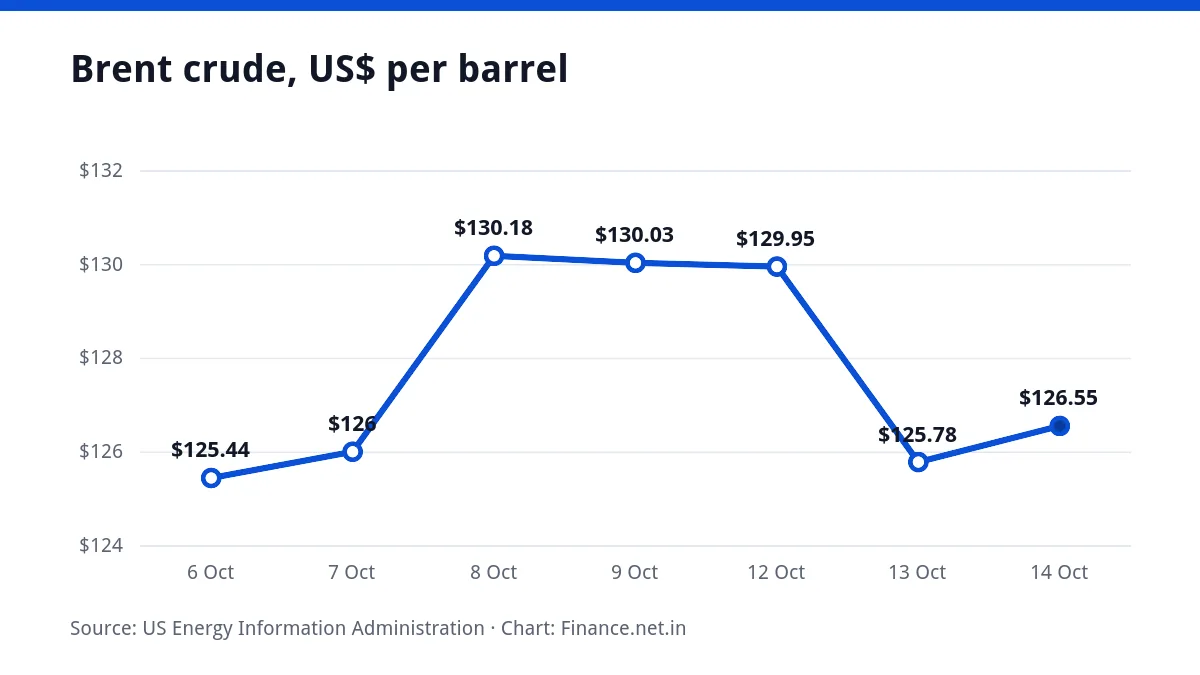
Brent crude, the international benchmark that India’s oil import prices are linked to, closed at $126.55 a barrel on 14 October 2026, according to the US Energy Information Administration (EIA); it rose 0.61% from the previous trading day. West Texas Intermediate (WTI), the US benchmark, rose 1.04% to $101.91.
Crude oil prices
| Benchmark | Price per barrel | 1-day change | Range, last 10 trading days |
|---|---|---|---|
| Brent | $126.55 | +$0.77 (+0.61%) | $114.82 – $135.51 |
| WTI | $101.91 | +$1.05 (+1.04%) | $95.02 – $101.91 |
Brent traded $24.64 above WTI.
Seven-day trend
| Date | Brent | WTI |
|---|---|---|
| 14 October 2026 | $126.55 | $101.91 |
| 13 October 2026 | $125.78 | $100.86 |
| 12 October 2026 | $129.95 | $98.73 |
| 9 October 2026 | $130.03 | $98.73 |
| 8 October 2026 | $130.18 | $98.26 |
| 7 October 2026 | $126.00 | $95.02 |
| 6 October 2026 | $125.44 | $96.24 |
Why crude prices matter in India
India imports most of the crude oil it uses, so the price of Brent feeds into the country’s import bill, the value of the rupee and, over time, fuel and transport costs. Retail petrol and diesel prices in India are set by the oil marketing companies and also include central and state taxes, so they do not move one-to-one with crude. A sustained rise in crude prices usually puts pressure on inflation and on the rupee, and a fall eases both.
Brent is a blend of crudes from the North Sea and is the reference for most oil traded internationally, including the Middle Eastern grades India buys. WTI is a lighter crude delivered at Cushing, Oklahoma, and mainly reflects supply and demand in the United States. The gap between the two widens or narrows with shipping costs, US output and inventories.
The EIA publishes daily spot prices with a delay of one or two working days, so the latest figure here is for the most recent trading day available, not today.
Source: US Energy Information Administration, Europe Brent and WTI Cushing spot prices (FOB). For information only.