IMF says India’s revised GDP method matches its advice

The IMF says India's GDP base revision is a welcome development and consistent with its advice, as a row over the 7.8% June quarter growth figure continues.

Coins and rising blocks on a desk representing GDP measurement
The IMF said India's revised GDP method follows good practice. Illustration: AI-generated.

Key points

  • The IMF said on 15 October 2026 that India's updated GDP methodology matches best practices and its own advice.
  • Krishna Srinivasan called the GDP base revision a 'welcome development' and credited MoSPI for improving statistics.
  • The new GDP series uses the financial year ending March 2023 as its base, which changed last year's quarterly figures.
  • A political row followed the 7.8% growth figure for the June quarter, which former Finance Secretary S C Garg contested.

What happened

The International Monetary Fund (IMF) said on Thursday, 15 October 2026, that India’s updated method of calculating gross domestic product (GDP) follows good practice and fits its advice. Krishna Srinivasan, Director of the IMF’s Asia and Pacific Department, called the GDP base revision a “welcome development”, according to reports by PTI carried in The Hindu and BusinessLine.

Speaking to reporters in Bangkok, he said the changes match the guidance given to India, including from the IMF’s statistics department. He added that India had issued a note explaining the revisions.

“In terms of GDP numbers, what they have done is consistent with good practices,” Srinivasan said, adding there is always room for improvement.

He also asked that the work done by the Ministry of Statistics and Programme Implementation (MoSPI) to improve GDP statistics be recognised.
The IMF said on 15 October 2026 that India's updated GDP methodology matches best practices and its own advice.

What it means for you

GDP is the total value of goods and services an economy produces. A GDP series needs a base year, a reference period against which later growth is measured. When the base year or method changes, past figures are restated, so growth rates for earlier periods can differ from what was published before.

The IMF’s comments are a view on the technical soundness of the method. They do not settle the political argument, but they are one outside assessment of how the numbers are compiled.

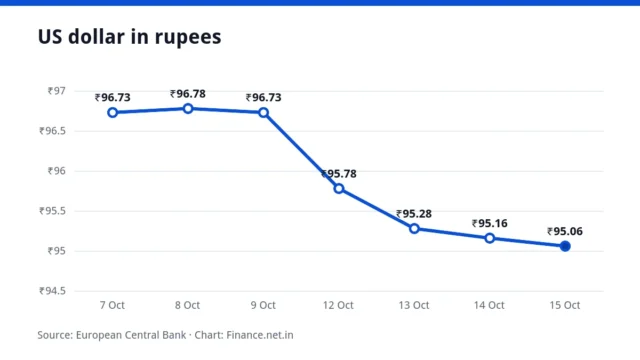
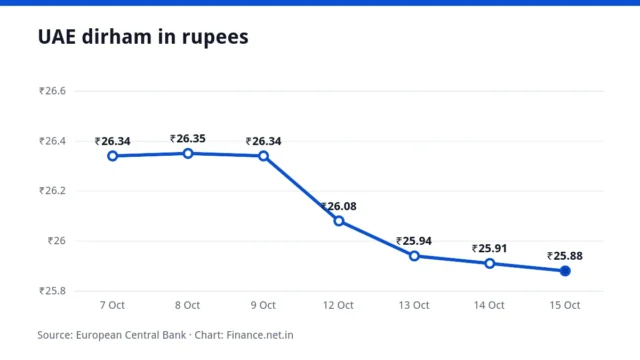
Srinivasan also spoke about the rupee. He described India as having entered the energy shock from a position of strength and said it has handled the situation well. He said weakness in the currency should not be taken as a sign of economic failure, because the exchange rate depends on global interest rates, investor risk appetite and oil prices. In his view, it does not show growth and the currency moving apart in any real sense.

The IMF’s Regional Economic Outlook for Asia and Pacific, released the same day, lists India among emerging economies whose currencies came under pressure after the energy shock. It says that pressure has partly eased over the past few months and notes that India was among the economies that stepped into foreign exchange markets.

If you send money to India or hold rupee assets, you can check conversions with our currency converter.

Background

Last month, the government released GDP growth of 7.8% for the June quarter, better than expected. Former Finance Secretary S C Garg contested it, claiming the data was artificially boosted by compressing the previous year’s figures. Opposition parties took up the claim and questioned the integrity of the data.

Chief Economic Advisor V Anantha Nageswaran called Garg’s approach “cherry-picking” of data. He said the latest figures were compiled with the financial year ending March 2023 as the new base, and that the change in methodology led to revisions in last year’s quarterly data.
What it means for you

The IMF's view backs the technical basis of India's revised GDP series, though the political dispute over the June quarter figure of 7.8% continues. For households, the main effect is that past growth numbers have been restated under the new base year. Rupee pressure, the IMF said, reflects global rates, risk appetite and oil prices rather than a break from growth.

Currency Converter CAGR Calculator

Frequently asked questions

What did the IMF say about India's GDP methodology?

Krishna Srinivasan said the revisions are entirely consistent with the advice the IMF has given India, including from its statistics department, and called the base revision a welcome development.

What is the new base year for India's GDP?

According to Chief Economic Advisor V Anantha Nageswaran, the latest figures use the financial year ending March 2023 as the new base.

Why was there a political row over GDP?

Former Finance Secretary S C Garg claimed the 7.8% June quarter growth was boosted by compressing the previous year's figures. The Chief Economic Advisor called this cherry-picking, saying the methodology change led to revisions in last year's quarterly data.

Sources

  1. IMF backs India’s updated GDP methodology, calls revision ‘welcome development’ — ThePrint — Economy
  2. IMF backs India's updated GDP methodology, calls revision 'welcome development' — BusinessLine — Economy
  3. IMF backs India's updated GDP methodology, calls revision 'welcome development' — The Hindu — Business
  4. IMF backs India's updated GDP methodology, calls revision 'welcome development' — CNBC-TV18 — Economy
  5. ‘Welcome development’: IMF backs India’s updated GDP methodology — ThePrint — Economy

This article is for information only and is not investment, tax or legal advice. Figures are from the sources linked above as of the publish or update time. Please verify with official sources or a qualified adviser before making financial decisions.